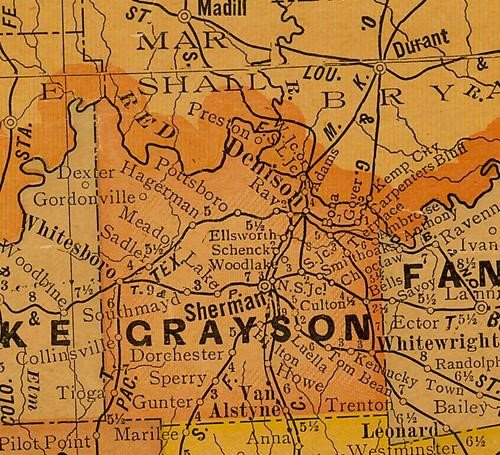
High above the Red River, where Southeastern Oklahoma meets North Texas, stands one of the region’s most fascinating landmarks: the Carpenters Bluff Bridge. Built in 1910, this historic structure connects the small community of Hendrix, Oklahoma, with Grayson County, Texas, and remains one of the most striking symbols of historic Oklahoma. More than a bridge of steel and wood, it is a bridge across time—offering modern visitors a rare glimpse into Oklahoma history at the dawn of the twentieth century.
Early Days on the Red River
Before steel trusses stretched across the Red River, crossings here were slow, uncertain, and often dangerous. Ferries served as the only reliable connection between rural Oklahoma and Texas. One of the best known was operated by E.E. Carpenter, an early settler who gave the future bridge its name. Carpenter’s ferry carried goods, livestock, and families from one state to the other, but it was at the mercy of weather and river currents.
As the twentieth century approached, railroads emerged as the lifeblood of the region. Southeastern Oklahoma was rich in coal, timber, and agricultural products. Connecting these resources to Texas markets required a permanent, dependable structure that could withstand the Red River’s unpredictable floods.
https://youtu.be/NtOV8TIWD6I?si=6caT2j8FFkZelajQ
Building the Carpenters Bluff Bridge
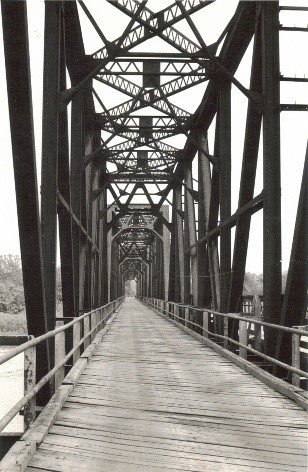
In 1910, the Missouri, Oklahoma & Gulf Railway (MO&G) commissioned the construction of a steel truss bridge across the river at Carpenter’s Bluff. The structure was designed both for locomotives and for traditional travel by wagon, horseback, or foot.
The design included a unique wagon shelf—a narrow wooden lane attached to the side of the bridge. This shelf was used by pedestrians, wagons, and later, the earliest automobiles. Tolls were collected, just as they had been with the ferry. The arrangement reflected the transitional period in American life: trains carried industry forward, while rural families still relied on horse-drawn transportation.
Railroads, Coal, and Commerce
During its early years, the Carpenters Bluff Bridge played a vital role in shipping coal from Southeastern Oklahoma mines to Texas. Coal trains rumbled across the river, helping fuel the rapid industrial growth of the Southwest.
For Bryan County residents, the bridge was more than an economic engine. It was also a gateway to Texas markets and communities. Farmers could move produce and livestock more easily, and families used the crossing to connect with relatives and opportunities across the state line.
The Shift to Automobiles
By the mid-twentieth century, railroads began to decline in influence. The Kansas, Oklahoma & Gulf Railway (KO&G), which later managed the bridge, reduced its operations, and eventually abandoned rail service altogether.
County commissioners from Bryan County, Oklahoma, and Grayson County, Texas, recognized the bridge’s value and converted it fully to automobile use. For decades, cars and trucks carefully shared the narrow passage with pedestrians. Local residents often recall their first drive across its wooden planks—an experience equal parts thrilling and nerve-wracking.
Community Connections and Local Life
For many families in Southeastern Oklahoma, the Carpenters Bluff Bridge was woven into daily routines. Residents of Hendrix and nearby communities crossed into Texas for mail service, shopping, and business.
Children remember walking the bridge to fish in the Red River. Couples took evening strolls along the creaky boards, enjoying sunsets over the water. The bridge became a cultural landmark—a place where personal stories intertwined with Oklahoma history.
Even as modern highways and infrastructure expanded, locals remained attached to the Carpenter’s Bluff crossing. It wasn’t just a way to get across the river; it was part of their identity.
Preservation and Modern Status
Rumors have long circulated that the Carpenters Bluff Bridge might be demolished as newer crossings were built. In fact, a new bridge now spans the Red River nearby, handling modern traffic needs.
Yet community leaders and preservationists understood the importance of protecting this rare relic of historic Oklahoma. The decision was made to preserve the Carpenters Bluff Bridge as a pedestrian-only crossing. No longer open to vehicles, the bridge is now a safer destination for walkers, families, and history enthusiasts.
Today, visitors can walk the length of the old bridge, hearing the creak of the boards beneath their feet, much as travelers did more than a century ago. The sweeping views of the Red River offer a sense of timelessness, connecting past and present.
A Symbol of Southeastern Oklahoma Heritage
The Carpenters Bluff Bridge tells a broader story about Southeastern Oklahoma. It embodies the region’s transition from ferryboats to railroads, from coal trains to automobiles, and now from industrial crossing to historic landmark.
Few places capture the layers of Oklahoma history so vividly. The bridge reminds us of the settlers who braved river currents, the railroad companies that expanded commerce, the farmers and families who depended on the crossing, and the modern residents who fought to preserve it.
Walking across the Carpenters Bluff Bridge is not just about sightseeing—it’s about stepping into the story of a community that has adapted and endured for generations.
Why Historic Landmarks Matter
Bridges like Carpenters Bluff are more than steel and timber; they are archives in plain sight. They preserve stories that don’t fit neatly in textbooks but remain alive in memory, folklore, and family traditions.
For Southeastern Oklahoma, this bridge represents resilience and progress. It links the past with the present, offering lessons in engineering, commerce, and community spirit. In an age when so many historic sites vanish, its preservation ensures that future generations can experience a tangible piece of historic Oklahoma.
Visiting the Carpenters Bluff Bridge Today
If you visit Hendrix, Oklahoma, the Carpenters Bluff Bridge is worth the stop. The pedestrian-only walkway makes it safe for families, and it’s a popular place for photography, fishing, and quiet reflection.
As you walk, imagine trains loaded with coal, wagons creaking across wooden planks, or children in the 1930s carrying mail across the river. Few other places in the Texoma region bring history so close to life.
Whether you’re drawn by local heritage, curious about Oklahoma history, or simply looking for a scenic stroll, this bridge delivers an unforgettable experience.
Conclusion
The Carpenters Bluff Bridge in Hendrix, Oklahoma, is one of the last of its kind. Built in 1910, it carried ferries, trains, wagons, cars, and countless memories across the Red River. Today, preserved as a historic landmark, it remains a living symbol of historic Oklahoma and the enduring spirit of Southeastern Oklahoma.
It continues to draw visitors from across the Texoma region and beyond—people who come not only for the view but for the chance to step into the past. In a world that changes quickly, places like Carpenters Bluff remind us that some things are worth holding onto.